
SEO Meta Title: Different Types of Wedding Rings: Complete Guide
Meta Description: Explore different types of wedding rings, including styles, metals, settings, finishes, and matching tips to choose a ring that suits your love and lifestyle.
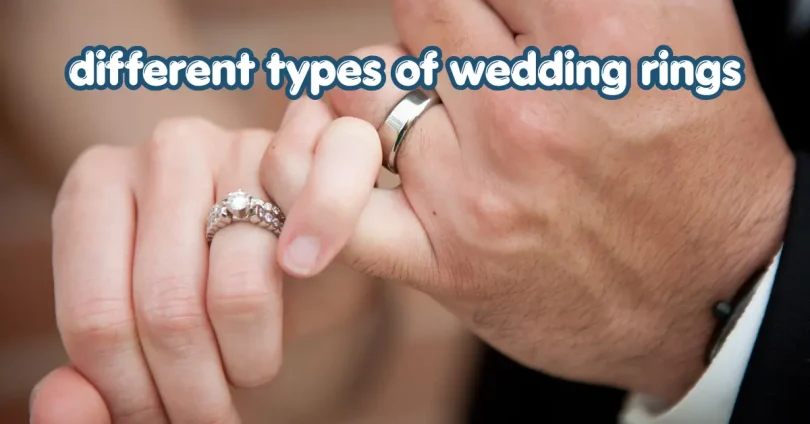
Different types of wedding rings offer couples a wide range of choices, from classic plain bands to diamond-set eternity rings and modern curved designs. The right wedding ring depends on your personal style, comfort, budget, metal preference, and how well the ring works with your engagement ring.
This guide explains the most popular wedding ring styles, common metals, ring profiles, finishes, settings, matching options, and practical buying tips. Whether you want something traditional, modern, minimalist, or distinctive, understanding the options can make choosing a wedding ring much easier.
What Is a Wedding Ring?
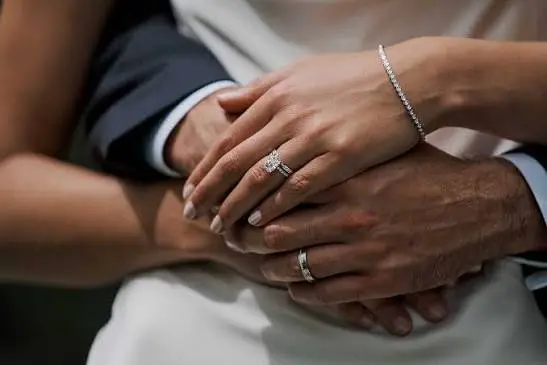
A wedding ring is a ring traditionally exchanged during a marriage ceremony as a symbol of commitment and partnership. Wedding rings can be simple metal bands or feature diamonds and other gemstones.
Unlike engagement rings, which commonly emphasize a central gemstone, wedding rings are often designed around the band itself. However, there are no universal rules about how a wedding ring must look.
Couples can choose:
- Plain or diamond-set bands
- Matching or individually designed rings
- Narrow or wide bands
- Traditional or contemporary profiles
- Different precious metals
- Polished, matte, hammered, or textured finishes
The best choice is ultimately one that feels comfortable and fits the wearer’s lifestyle and personal preferences.
Popular Different Types of Wedding Rings
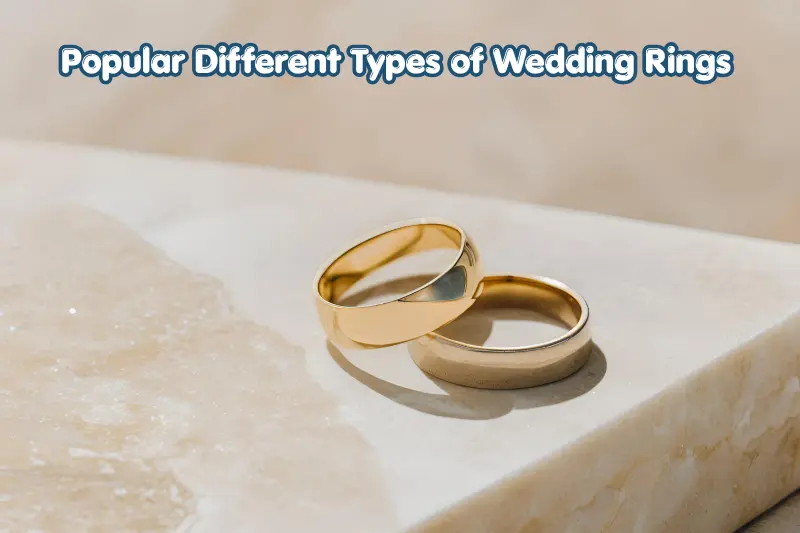
There are many ways to classify wedding rings. The most useful starting point is the overall design of the band.
1. Classic Plain Wedding Band
The classic plain wedding band is one of the simplest and most traditional choices. It usually consists of a continuous metal band without gemstones.
Its clean appearance makes it suitable for people who prefer understated jewelry.
Why choose a plain band?
- Simple and timeless appearance
- Easy to wear every day
- Usually easier to clean than intricate designs
- Works with many engagement ring styles
- Available in various widths and metals
A plain band can be completely smooth or include subtle details such as rounded edges or a brushed finish.
2. Diamond Wedding Band
A diamond wedding band includes one or more diamonds set into the ring. Depending on the design, diamonds may cover a small portion of the band or extend around much of its circumference.
This style adds sparkle while still keeping the ring centered around the band.
Diamond wedding rings are available in designs such as:
- Channel-set bands
- Pavé bands
- Shared-prong bands
- Bezel-set bands
- Half-eternity rings
- Full-eternity rings
3. Half-Eternity Wedding Ring
A half-eternity ring typically has gemstones set around part of the upper portion of the band rather than around the entire circumference.
This design can provide a balance between sparkle and practicality.
Because the lower portion of the band remains plain, some people find half-eternity designs more comfortable for everyday wear than a fully stone-set band.
4. Full-Eternity Wedding Ring
A full-eternity wedding ring has gemstones set continuously around the band.
The main visual feature is consistent sparkle from different viewing angles.
However, this style requires particular consideration before buying because resizing a fully stone-set band can be more complicated than resizing a simple metal band.
For this reason, getting the correct size is especially important.
5. Pavé Wedding Band
In a pavé wedding band, small gemstones are positioned closely together along the surface of the ring, creating a sparkling appearance.
Pavé designs can complement diamond engagement rings particularly well.
When considering pavé jewelry, inspect how securely the stones are set and consider your daily activities. Tiny settings may require more attention than a plain band.
6. Channel-Set Wedding Band
Channel-set rings hold small gemstones between two metal edges. The stones sit within a channel rather than being individually surrounded by prominent prongs.
This design creates a relatively smooth surface.
Channel-set wedding bands are often considered when someone wants gemstone detail without a highly raised setting.
7. Bezel-Set Wedding Ring
A bezel setting surrounds the edge of a gemstone with metal.
This creates a smooth and structured appearance while protecting much of the stone’s perimeter.
Bezel-set wedding bands can be a good option for people who prefer a modern look or want a design with fewer exposed edges.
8. Contoured or Curved Wedding Band
A contoured wedding band is shaped to follow the profile of an engagement ring.
Instead of being completely straight, the band may curve around the center stone or setting.
This can be useful when a straight wedding band leaves a noticeable gap beside an engagement ring.
The exact shape should be checked against the engagement ring before purchase because not every curved band will fit every setting.
9. Stackable Wedding Ring
A stackable wedding ring is designed to be worn alongside other rings.
Some people wear a wedding band with an engagement ring, while others build a combination of several bands.
Stacking provides flexibility because rings can be mixed according to occasion, style, or personal preference.
10. Vintage-Inspired Wedding Ring
Vintage-inspired wedding rings borrow visual elements from historical jewelry styles.
Common details include:
- Milgrain edges
- Engraving
- Filigree
- Decorative borders
- Intricate metalwork
- Antique-style finishes
These rings can be particularly appealing to people who prefer detailed craftsmanship over minimalist designs.
11. Modern Wedding Ring
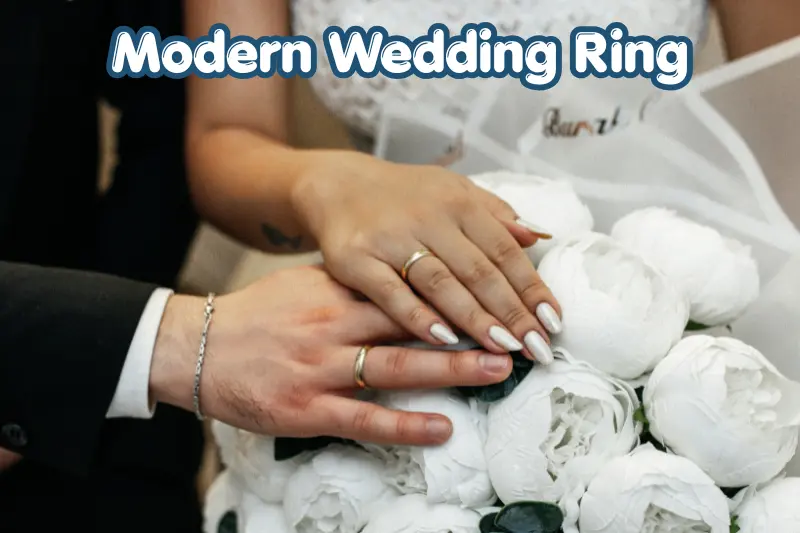
Modern wedding bands often use clean lines, unusual profiles, mixed metals, geometric details, or contemporary finishes.
A modern design does not necessarily need gemstones. A sculptural metal band can create a distinctly contemporary appearance on its own.
12. Hammered Wedding Band
A hammered wedding band has a textured surface created through deliberate impressions in the metal.
The result is an irregular, handcrafted-looking appearance.
Hammered finishes can also make minor surface marks less visually obvious than they might be on a highly polished band.
13. Milgrain Wedding Band
Milgrain refers to a decorative border made from small bead-like details along the edge of a ring.
It is commonly associated with vintage and antique-inspired jewelry.
Milgrain can add visual texture without requiring gemstones.
14. Engraved Wedding Band
An engraved wedding ring contains decorative or personalized designs cut or marked into the metal.
Engraving can include:
- Names
- Dates
- Initials
- Short messages
- Patterns
- Geometric details
For personal inscriptions, remember that available space is limited, particularly on narrow bands.
Different Wedding Ring Metals
The metal you choose affects appearance, durability, maintenance, and price.
Gold Wedding Rings
Gold remains a popular material for wedding jewelry and is available in different colors and purities.
Common choices include:
- Yellow gold
- White gold
- Rose gold
Gold purity is commonly expressed in karats. Higher-karat gold contains a greater proportion of gold, while lower-karat gold contains more alloying metals.
Platinum Wedding Rings
Platinum is a naturally white precious metal often selected for wedding jewelry.
It is dense and durable and can be particularly appealing to people who want a naturally white metal rather than a plated appearance.
Platinum is also relatively heavy compared with many other jewelry metals, which contributes to its distinctive feel.
White Gold Wedding Rings
White gold is made by combining gold with other metals to create a lighter-colored alloy. Many white-gold rings receive a rhodium coating to enhance their bright white appearance.
That coating can wear over time and may require professional maintenance.
Rose Gold Wedding Rings
Rose gold gets its warm pinkish color from the alloy used with gold.
It offers a different appearance from traditional yellow or white gold and can work particularly well for people who prefer warmer jewelry tones.
How Wedding Ring Profiles Affect Comfort
The shape of the ring’s cross-section can make a noticeable difference to comfort.
Flat Wedding Bands
Flat bands have a straighter profile and a contemporary appearance.
They can provide a clean, modern look but may feel different from rounded bands when worn.
Rounded Wedding Bands
Rounded profiles have curved outer surfaces and are often chosen for their smooth feel.
They are available in many widths and metals.
Comfort-Fit Wedding Bands
A comfort-fit band generally has a rounded interior rather than sharp interior edges.
This can make the ring easier to slide over the finger and may improve everyday comfort.
However, comfort is highly individual, so trying the ring on remains important.
Wedding Ring Finishes
The finish changes the visual character of a ring even when the basic shape stays the same.
High-Polish Finish
A high-polish finish creates a bright, reflective surface.
It gives a classic jewelry appearance but can also make scratches and marks more noticeable.
Matte Finish
A matte finish reduces reflection and creates a softer appearance.
It is a useful option for someone who prefers understated jewelry.
Brushed Finish
Brushed metal has fine directional lines that create subtle texture.
It offers a modern appearance without the strong reflection of highly polished metal.
Satin Finish
A satin finish provides a smooth but less reflective surface.
It can sit between a glossy polish and a heavily textured finish.
How to Choose the Right Wedding Ring
Choosing among the different types of wedding rings becomes easier when you evaluate the decision in a logical order.
Step 1: Consider Your Lifestyle
Think about what you do every day.
If your hands are frequently exposed to tools, sports, chemicals, or physical work, a highly intricate ring may require more care.
For an active lifestyle, consider:
- Smooth surfaces
- Secure settings
- Practical widths
- Lower-profile designs
- Durable metals
Step 2: Decide on the Metal
Consider whether you prefer yellow, white, or rose tones.
Also think about whether your engagement ring and wedding band should use the same metal.
Matching metals can create a coordinated appearance, while mixed metals can provide deliberate contrast.
Step 3: Choose the Width
Wedding bands can range from very narrow designs to substantially wider bands.
A narrow ring can create a delicate appearance, while a wider band can feel more substantial.
Try different widths rather than choosing based only on photographs.
Step 4: Think About Your Engagement Ring
If you already have an engagement ring, place potential wedding bands beside it.
Check:
- Whether the rings sit comfortably together
- Whether they rub against each other
- Whether the band fits beneath the engagement ring setting
- Whether the widths look balanced
- Whether the metals complement each other
Step 5: Consider Maintenance
A plain metal band generally has fewer components to inspect than a gemstone-heavy ring.
If you choose a diamond or detailed setting, ask the jeweler about cleaning, inspection, repairs, and resizing.
Step 6: Get the Correct Size
Finger size can change during the day and with temperature.
For an important purchase, have your finger professionally measured and discuss how the particular ring’s width and profile affect sizing.
Wedding Ring Styles Comparison
| Wedding Ring Type | Main Feature | Style | Maintenance Consideration |
|---|---|---|---|
| Plain Band | Solid metal | Classic | Generally simple |
| Diamond Band | Multiple diamonds | Sparkling | Stones need inspection |
| Half-Eternity | Stones on part of band | Elegant | Moderate |
| Full-Eternity | Stones around band | High sparkle | Resizing can be complex |
| Pavé | Closely set small stones | Glamorous | Settings need care |
| Channel-Set | Stones in channel | Sleek | Inspect channels and stones |
| Bezel-Set | Metal surrounds stones | Modern | Smooth protective design |
| Hammered | Textured metal | Artistic | Texture can change over time |
| Engraved | Decorative markings | Personal | Details may require care |
| Contoured | Curved profile | Coordinated | Must match engagement ring |
How to Match a Wedding Band With an Engagement Ring
Matching does not necessarily mean choosing an identical design.
There are several approaches.
Match the Metal
Using the same metal creates a cohesive appearance.
For example, a white-metal engagement ring can be paired with a white-metal wedding band for a coordinated look.
Match the Design Detail
A wedding band can repeat one small detail from the engagement ring, such as:
- Diamond shape
- Milgrain
- Engraving
- Curved profile
- Metal color
This creates visual connection without making the rings look identical.
Create Contrast
Some couples deliberately choose different metals or finishes.
For example, a polished engagement ring can be paired with a subtly textured wedding band.
The important point is that the rings should work comfortably together.
Should Wedding Rings Match?
Wedding rings do not have to match.
Some couples prefer matching bands because they create a shared visual symbol. Others choose completely different rings based on individual taste, profession, comfort, or lifestyle.
Matching is therefore a personal design choice rather than a requirement.
A couple can coordinate their rings through:
- The same metal
- Similar finishes
- Shared engraving
- Similar widths
- Complementary textures
Common Mistakes to Avoid
Choosing Only Based on Appearance
A beautiful ring still needs to be comfortable and practical for everyday use.
Consider how it feels on your finger, not just how it looks in photographs.
Ignoring the Engagement Ring
If you plan to wear both rings together, check their physical compatibility before buying.
Choosing the Wrong Size
Sizing becomes especially important with wider bands, intricate designs, and eternity-style rings.
Forgetting Maintenance
Gemstone settings can require periodic inspection and cleaning.
Ask the jeweler what maintenance the specific ring requires.
Following Trends Without Considering Personal Style
Wedding rings are often worn for many years. A design should make sense for the person wearing it rather than simply following a short-lived trend.
Buying Without Understanding the Metal
Different metals have different characteristics. Ask about durability, color, care requirements, resizing, and long-term maintenance before purchasing.
Tips for Buying a Wedding Ring
Use this checklist before making your final decision:
- Decide your preferred metal color.
- Set a realistic budget.
- Consider your daily activities.
- Try several ring widths.
- Compare different finishes.
- Check compatibility with your engagement ring.
- Confirm the correct ring size.
- Ask about resizing.
- Ask about cleaning and maintenance.
- Review the jeweler’s return or exchange policy.
- Keep documentation related to the purchase and materials.
How Much Should You Spend on a Wedding Ring?
There is no universal amount that every couple should spend on a wedding ring.
A sensible budget should reflect your financial situation, preferred material, design, gemstone choices, and long-term priorities.
A simple gold band can have a very different price from a platinum band containing numerous diamonds.
Instead of following a fixed spending rule, compare the total cost with:
- Metal type and purity
- Ring weight
- Gemstone characteristics
- Craftsmanship
- Brand or jeweler
- Customization
- Certification where applicable
- Warranty and aftercare
Custom vs. Ready-Made Wedding Rings
Ready-Made Rings
Ready-made rings are produced in established designs and are often available in standard sizes and metals.
Benefits include:
- Faster purchase process
- Easier comparison
- Many established designs
- Potentially simpler ordering
Custom Wedding Rings
Custom rings are designed specifically for the customer.
They may be useful when you want a particular width, engraving, unusual shape, mixed-metal design, or special fit.
Potential limitations include:
- Longer production time
- More design decisions
- Potentially higher cost
- Resizing or modification considerations
Ask the jeweler for a clear explanation of the design, materials, timeline, and final price before approving custom work.
How to Care for a Wedding Ring
Good care can help preserve the appearance of your ring.
For routine care:
- Clean the ring according to the metal and gemstone manufacturer’s or jeweler’s recommendations.
- Avoid exposing jewelry to unsuitable chemicals.
- Store the ring safely when you are not wearing it.
- Check gemstone settings periodically.
- Have intricate or gemstone-set rings professionally inspected when appropriate.
- Follow specific care instructions for the metal and stones.
Do not assume that every ring can be cleaned using the same household method. Gemstones, finishes, and settings can have different care requirements.
Frequently Asked Questions
What are the most common types of wedding rings?
Common wedding ring styles include plain bands, diamond bands, half-eternity rings, full-eternity rings, pavé bands, channel-set rings, bezel-set rings, contoured bands, engraved rings, and textured designs. The best style depends on your preferred appearance, comfort, engagement ring, lifestyle, and maintenance preferences.
What is the most traditional wedding ring style?
A simple plain metal band is one of the most traditional wedding ring designs. It has a straightforward appearance and does not rely on gemstones or elaborate decoration. However, traditions vary between cultures and families, so couples can choose a wedding ring that reflects their own preferences and customs.
Should a wedding ring match the engagement ring?
A wedding ring does not have to match the engagement ring exactly. Some people choose the same metal and complementary details, while others deliberately mix metals or styles. If the rings will be worn together, physical fit is important, so try them together before purchasing.
What metal is best for a wedding ring?
There is no single metal that is best for everyone. Gold, platinum, and other jewelry metals offer different combinations of appearance, durability, weight, maintenance, and price. Consider your lifestyle, preferred color, budget, and how you want the ring to look alongside other jewelry before choosing.
How do I choose the right wedding ring?
Start by considering your lifestyle, budget, preferred metal, ring width, comfort, and engagement ring compatibility. Then compare different profiles, finishes, gemstone settings, and maintenance requirements. Try several rings on your finger and ask a reputable jeweler about sizing, durability, resizing, cleaning, and aftercare before making your final choice.
Conclusion
The different types of wedding rings range from timeless plain bands to diamond eternity rings, modern textured designs, vintage-inspired styles, and curved bands made to complement engagement rings.
The right choice should balance appearance with comfort, durability, lifestyle, budget, and long-term maintenance. There is no single design that suits every couple.
Before buying, compare several styles, try different widths and profiles, check how the ring works with your engagement ring, and ask the jeweler about materials, sizing, care, and after-sales service. A thoughtful comparison will make it easier to choose a wedding ring you will feel comfortable wearing for years.
SEO-Friendly URL Slug
different-types-of-wedding-rings
Five Image Alt Texts
- Different types of wedding rings in classic and modern styles
- Gold and platinum wedding rings with different designs
- Diamond and plain wedding bands displayed together
- Curved wedding ring paired with an engagement ring
- Popular wedding ring styles and metal finishes
Five Related Article Ideas
- How to Choose the Right Wedding Ring for Your Lifestyle
- Gold vs Platinum Wedding Rings: Key Differences
- Wedding Ring vs Engagement Ring: What Is the Difference?
- How to Match a Wedding Band With an Engagement Ring
- Best Wedding Ring Styles for Different Personalities
Rank Math Schema Title
Different Types of Wedding Rings: Complete Buying Guide
Rank Math Schema Description
Explore different types of wedding rings, including styles, metals, settings, finishes, and practical tips for choosing a comfortable and beautiful ring.
Focus Keyword
different types of wedding rings
Five Related Keywords
- types of wedding rings
- wedding ring styles
- different wedding band styles
- types of wedding bands
- how to choose a wedding ring