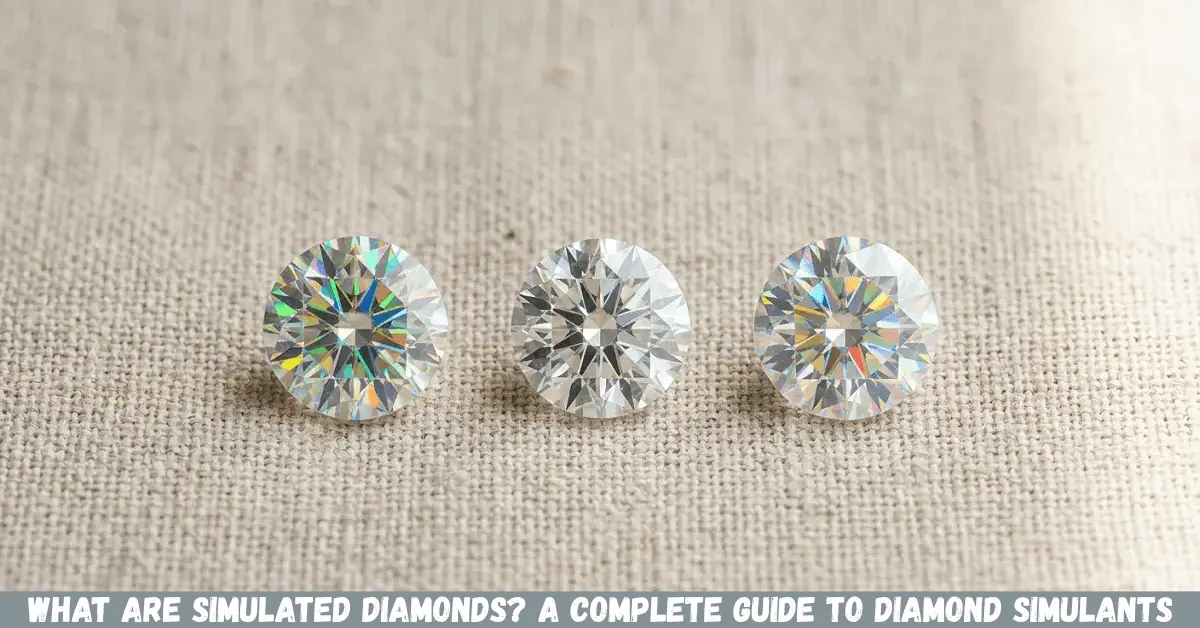

What Are Simulated Diamonds?
What are simulated diamonds? Simulated diamonds are materials designed to look like diamonds but are not actually diamond. They are also called diamond simulants or diamond imitations. Common examples include cubic zirconia (CZ) and synthetic moissanite.
The important distinction is that a simulated diamond does not have the same chemical composition and physical properties as a diamond. A lab-grown diamond, on the other hand, is an actual diamond created in a laboratory rather than formed naturally underground.
This difference matters when you are shopping for jewelry because terms such as simulated, imitation, lab-grown, synthetic, and natural diamond do not mean the same thing.
For Indian buyers, understanding these terms can make it easier to compare engagement rings, earrings, pendants, bracelets, and other diamond-style jewelry without confusing appearance with gemstone identity.
What Does “Simulated Diamond” Mean?
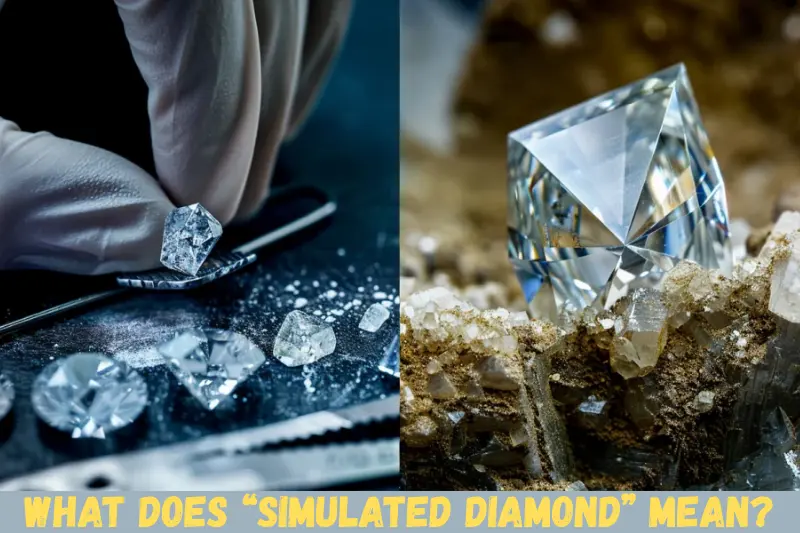
A simulated diamond is a gemstone or other material selected or manufactured to imitate the appearance of a diamond. It can have impressive brilliance and may look very similar to a diamond when set in jewelry, but it is not chemically or physically the same material as diamond.
The word simulated describes the purpose of the stone: it is being used to simulate or imitate the appearance of diamond.
For example:
- Cubic zirconia (CZ) can be cut to resemble a diamond.
- Synthetic moissanite is another popular diamond simulant.
- Certain colorless gemstones can also be used as diamond substitutes.
- Some older diamond simulants include synthetic spinel, synthetic rutile, and other man-made materials.
A simulated diamond is therefore better understood as a diamond look-alike, not a different type of diamond.
Simulated Diamonds vs Lab-Grown Diamonds
One of the biggest sources of confusion is the difference between simulated diamonds and lab-grown diamonds.
A simulated diamond is not a diamond, while a lab-grown diamond is a real diamond produced by human-controlled laboratory processes.
According to GIA, laboratory-grown diamonds have essentially the same chemical composition and crystal structure as natural diamonds. They can be produced using methods such as HPHT (High Pressure, High Temperature) and CVD (Chemical Vapor Deposition).
Here is a simple comparison:
| Feature | Natural Diamond | Lab-Grown Diamond | Simulated Diamond |
|---|---|---|---|
| Formed naturally | Yes | No | No |
| Actually diamond | Yes | Yes | No |
| Carbon crystal structure | Yes | Yes | No |
| Designed to imitate diamond | No | No | Yes |
| Common examples | Mined diamond | HPHT, CVD diamond | CZ, moissanite |
| Can look like diamond | Yes | Yes | Yes |
| Same properties as natural diamond | — | Essentially similar | No |
The FTC also distinguishes simulated or imitation diamonds from laboratory-created diamonds and recommends clear disclosure so consumers understand what they are purchasing.
What Are the Most Common Types of Simulated Diamonds?
Several materials can be used to imitate diamond. However, cubic zirconia and synthetic moissanite are among the best-known diamond simulants in modern jewelry.
Cubic Zirconia
Cubic zirconia, commonly called CZ, is a man-made material widely used as a diamond imitation.
CZ is made from zirconium oxide and can be produced in colorless forms that visually resemble diamonds. GIA notes that synthetic cubic zirconia has been one of the most popular diamond simulants.
Its popularity comes from its diamond-like appearance and availability in many sizes and colors.
CZ is often found in:
- Fashion jewelry
- Earrings
- Rings
- Pendants
- Costume jewelry
- Decorative pieces
Because CZ is not diamond, its optical and physical properties differ from those of diamond.
Synthetic Moissanite
Synthetic moissanite is another popular diamond simulant made from silicon carbide.
It can produce strong brilliance and is frequently used in jewelry as an alternative to diamond. Although it can look very similar to diamond, moissanite has a different chemical composition and physical properties.
This makes it important to avoid assuming that a very sparkly colorless stone is automatically a diamond.
Other Diamond Simulants
Historically and commercially, other materials have also been used to imitate diamonds. These include certain types of synthetic sapphire, synthetic spinel, synthetic rutile, YAG, GGG, and colorless zircon.
Not all of these are equally common in modern consumer jewelry, but they demonstrate that the idea of using another material to imitate diamond is not new.
How Are Simulated Diamonds Made?
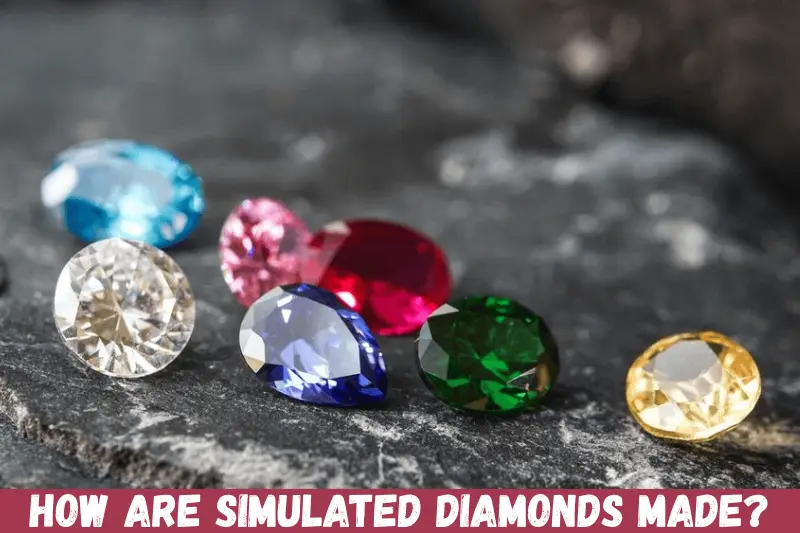
The manufacturing process depends on the material being used.
For example, cubic zirconia is produced synthetically, while synthetic moissanite is manufactured from silicon carbide. These materials are then cut and polished into shapes that can resemble traditional diamond cuts.
The final appearance depends heavily on:
- Cut
- Faceting
- Color
- Transparency
- Polish
- Setting
- Lighting
This is why a well-cut simulant can appear remarkably attractive in jewelry even though it is not a diamond.
It is also important to understand that making a diamond simulant is different from growing a laboratory diamond. Lab-grown diamonds are produced specifically to create diamond material, whereas simulants are different materials intended to imitate diamond.
Are Simulated Diamonds Fake?
Calling a simulated diamond simply “fake” can be misleading.
A better description is diamond imitation or diamond simulant. The stone is a real material, but it is not a diamond.
For example, cubic zirconia is genuinely cubic zirconia. Moissanite is genuinely moissanite. The problem only arises when a seller represents an imitation stone as a mined or laboratory-grown diamond.
The FTC specifically emphasizes clear disclosure for simulated or imitation diamonds so consumers are not misled about what they are buying.
So, a simulated diamond is not necessarily a poor-quality product. It simply belongs to a different gemstone category.
Are Simulated Diamonds Real Diamonds?
No. Simulated diamonds are not real diamonds.
They are materials that imitate the appearance of diamond.
This is different from laboratory-grown diamonds. GIA explains that laboratory-grown diamonds are real diamonds because they have essentially the same chemical composition and crystal structure as natural diamonds.
A simple way to remember the difference is:
Natural diamond: diamond formed by nature.
Lab-grown diamond: diamond created in a laboratory.
Simulated diamond: non-diamond material made or selected to look like diamond.
That distinction is one of the most important things to understand before purchasing diamond jewelry.
Simulated Diamonds vs Natural Diamonds
Natural diamonds form deep within Earth under extreme temperature and pressure over geological periods. They consist primarily of carbon arranged in the crystal structure characteristic of diamond.
Simulated diamonds do not form this way.
The differences include:
Chemical Composition
Natural diamonds consist of carbon in the diamond crystal structure.
Simulants such as CZ and moissanite have completely different chemical compositions.
Physical Properties
Diamond has distinctive physical characteristics, including very high hardness. GIA lists diamond at 10 on the Mohs hardness scale.
A simulant has its own hardness and other physical characteristics.
Optical Behavior
Simulants can create impressive sparkle, but the way they interact with light is not identical to diamond.
A trained gemologist can use scientific testing to distinguish different gemstone materials.
Origin
Natural diamonds originate through geological processes.
Simulated stones are manufactured or selected as substitutes.
What Are the Benefits of Simulated Diamonds?
Simulated diamonds can have practical advantages for people who primarily want the appearance of a diamond without specifically requiring diamond material.
1. Diamond-Like Appearance
High-quality simulants can provide an attractive, sparkling appearance when properly cut and polished.
2. Variety of Designs
Because simulant materials can be manufactured and cut into different sizes and shapes, jewelry designers have considerable flexibility.
3. Accessible Alternative
For some buyers, a simulant can provide the visual style they want while fitting a different jewelry budget.
The actual price varies considerably depending on the material, quality, setting, brand, craftsmanship, and retailer.
4. Suitable for Fashion Jewelry
Simulants are commonly used in fashion and decorative jewelry where the primary goal is visual appearance.
5. Easy to Find in Different Styles
Consumers can encounter simulated stones in many shapes, cuts, colors, and jewelry designs.
What Are the Limitations of Simulated Diamonds?
Simulated diamonds also have limitations that buyers should understand.
They Are Not Diamonds
The biggest limitation is straightforward: a simulant does not have the identity or material properties of diamond.
Appearance Can Differ
Although some simulants can look convincing, differences in brilliance, dispersion, color, and other optical characteristics may become noticeable under certain lighting or examination conditions.
Resale Expectations Can Differ
The market value of a simulant should not automatically be compared with that of a natural diamond. Buyers should check the actual material and understand how the jewelry is priced.
Durability Varies
Different simulants have different physical properties. You should therefore consider the specific material before selecting it for jewelry that will receive frequent wear.
How Can You Tell If a Stone Is a Simulated Diamond?
The most reliable approach is professional gemological testing rather than relying on internet “diamond tests.”
GIA notes that trained gemologists and laboratories can distinguish natural diamonds, laboratory-grown diamonds, and diamond simulants using specialized equipment and scientific measurements.
When buying jewelry, look for clear product information describing the stone.
Ask the seller:
- Is the stone a natural diamond?
- Is it laboratory-grown?
- Is it a simulant?
- What material is the simulant?
- Is there a grading or identification report?
- What is the return policy?
- Does the product description clearly identify the gemstone?
These questions can prevent confusion before you spend money.
Can You Identify a Simulated Diamond at Home?
Home tests found online should not be treated as definitive authentication methods.
For example, simply observing sparkle, using a loupe, or performing an informal household test cannot reliably establish the identity of every gemstone.
GIA recommends trained gemologists or independent gemological laboratories for reliable identification.
This is particularly important when a stone is expensive or when the seller’s description is unclear.
What Should Indian Buyers Check Before Buying?
If you are purchasing diamond-style jewelry in India, start by identifying exactly what the seller is offering.
Do not stop at phrases such as “diamond look,” “diamond-style,” or “diamond alternative.” Ask for the precise gemstone name.
Check the Product Description
The listing should clearly state whether the stone is:
- Natural diamond
- Laboratory-grown diamond
- Moissanite
- Cubic zirconia
- Another gemstone
- Another simulated material
Check Documentation
For higher-value purchases, ask whether an appropriate gemological report is available and verify that the documentation corresponds to the stone being sold.
Check the Seller’s Policies
The FTC consumer guidance recommends checking seller reputation, reviews, and refund or return policies when buying gemstones and jewelry.
Compare Like With Like
Do not compare the price of a CZ ring directly with the price of a natural diamond ring and assume the cheaper item is simply a “better deal.” They are different materials and products.
Instead, compare:
- Stone material
- Carat or size
- Cut
- Color
- Clarity where applicable
- Metal
- Craftsmanship
- Certification or documentation
- Warranty
- Return policy
Common Mistakes When Buying Simulated Diamonds
Mistake 1: Confusing Simulated and Lab-Grown
This is probably the most important mistake to avoid.
A lab-grown diamond is a diamond. A simulated diamond is not.
Mistake 2: Assuming “Synthetic” Always Means Simulant
The terminology can be confusing. In gemology, synthetic can refer to a man-made material that has essentially the same properties as its natural counterpart. Synthetic diamonds are therefore real diamonds, not diamond imitations.
Always identify the specific material rather than relying on one word.
Mistake 3: Buying Without Asking Questions
If the listing does not clearly identify the stone, ask before paying.
Mistake 4: Believing a Home Test Proves Everything
A home test may be interesting, but it should not replace professional identification for a valuable purchase.
Mistake 5: Assuming Sparkle Means Diamond
Brilliance alone does not establish gemstone identity. Different materials can be cut to create attractive sparkle.
Are Simulated Diamonds Good for Jewelry?
They can be a practical choice when the buyer wants the appearance of diamond rather than diamond material itself.
The right choice depends on the intended use, budget, preferred appearance, durability requirements, and whether having an actual diamond is important to the buyer.
For example, someone purchasing fashion earrings may be perfectly satisfied with CZ. Someone specifically looking for a diamond engagement ring may instead want a natural or laboratory-grown diamond.
There is no need to treat these as interchangeable products. They serve different purchasing purposes.
How to Choose a Simulated Diamond
If you decide that a simulant suits your needs, use a simple checklist:
- Identify the material. Find out whether it is CZ, moissanite, or another simulant.
- Inspect the cut. A well-executed cut can make a major difference in appearance.
- Check the color. Look for the color characteristics you prefer.
- Consider durability. Choose a material appropriate for how frequently you will wear the jewelry.
- Compare sellers. Look at reputation, policies, and product information.
- Confirm the price. Compare similar materials rather than unrelated diamond categories.
- Keep the documentation. Save receipts, product descriptions, certificates, and warranties.
Frequently Asked Questions
1. What are simulated diamonds made of?
Simulated diamonds can be made from different materials because “simulated diamond” describes a diamond imitation rather than one specific gemstone. Common examples include synthetic cubic zirconia and synthetic moissanite. These materials have different chemical compositions and physical properties from diamond, even though they can be cut and polished to resemble it.
2. Are simulated diamonds the same as lab-grown diamonds?
No. A simulated diamond is a non-diamond material designed to imitate diamond. A laboratory-grown diamond is actual diamond material produced in a laboratory. GIA states that laboratory-grown diamonds have essentially the same chemical composition and crystal structure as natural diamonds, while simulants do not.
3. Is cubic zirconia a simulated diamond?
Yes. Cubic zirconia, or CZ, is one of the best-known diamond simulants. It can be manufactured as a colorless material and cut into diamond-style shapes. However, CZ has a different chemical composition and physical properties from diamond, so it should be described as a simulant or imitation rather than as a diamond.
4. Can simulated diamonds look like real diamonds?
Yes, simulated stones can produce a diamond-like appearance, particularly when they are well cut and polished. However, appearance alone does not make them diamonds. Their optical and physical properties differ from diamond, and gemological testing can identify the material.
5. How can I know whether a diamond-style stone is simulated?
Start by checking the seller’s description and asking exactly what material the stone is. If you need reliable identification, use a trained gemologist or an independent gemological laboratory. GIA explains that specialized testing can distinguish diamond simulants from natural and laboratory-grown diamonds.
Conclusion
What are simulated diamonds? They are materials used to imitate the appearance of diamonds without actually being diamond. Common examples include cubic zirconia and synthetic moissanite.
The most important distinction is between a simulated diamond and a laboratory-grown diamond. Simulants only imitate diamond, while laboratory-grown diamonds are actual diamonds created through controlled manufacturing processes.
For buyers, the practical next step is simple: identify the exact material before purchasing. Ask the seller whether the stone is natural diamond, laboratory-grown diamond, moissanite, cubic zirconia, or another material. For valuable jewelry, consider professional gemological identification and review the seller’s documentation and return policy.