
What Are Fake Diamonds Called?
What are fake diamonds called? The most accurate general term is diamond simulants or diamond imitations. These are gemstones or materials that resemble diamonds but are not actually diamonds.
Common examples include cubic zirconia (CZ), moissanite, glass, and some other colorless gemstones. They can look very similar to diamonds, but their chemical composition and physical properties are different.
There is an important distinction, however. A lab-grown diamond is not a fake diamond. It is an actual diamond created in a laboratory rather than formed naturally underground. Lab-grown diamonds have essentially the same crystal structure and chemical composition as natural diamonds.
This guide explains the names used for fake or diamond-like stones, how they differ from real and lab-grown diamonds, which materials are commonly used, and what Indian buyers should check before purchasing diamond jewelry.
What Is a Diamond Simulant?
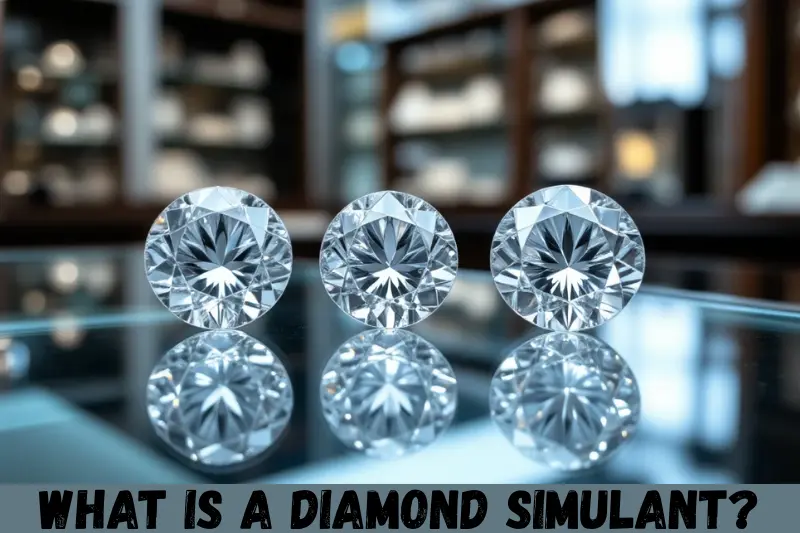
A diamond simulant is a material that imitates the appearance of a diamond without being a diamond.
The word “simulant” is widely used in gemology and the jewelry industry. GIA explains that simulants can be natural or laboratory-made materials that resemble another gemstone while having different chemical, physical, and optical properties.
For example, a clear cubic zirconia stone can be cut in a brilliant style and placed in a ring. From a distance, it may look like a diamond. However, cubic zirconia is made from zirconium oxide and does not have the same properties as diamond.
The same applies to synthetic moissanite. It can have impressive brilliance and fire, but it is not diamond because its composition and crystal structure are different.
Common Names for Fake Diamonds
You may see several terms used when shopping for diamond-looking jewelry:
- Diamond simulant
- Diamond imitation
- Simulated diamond
- Imitation diamond
- Diamond substitute
- Cubic zirconia or CZ
- Synthetic moissanite
- Diamond-like stone
These terms should not automatically be treated as interchangeable with “lab-grown diamond.” A lab-grown diamond belongs to a different category because it is actually diamond material.
What Is Cubic Zirconia?
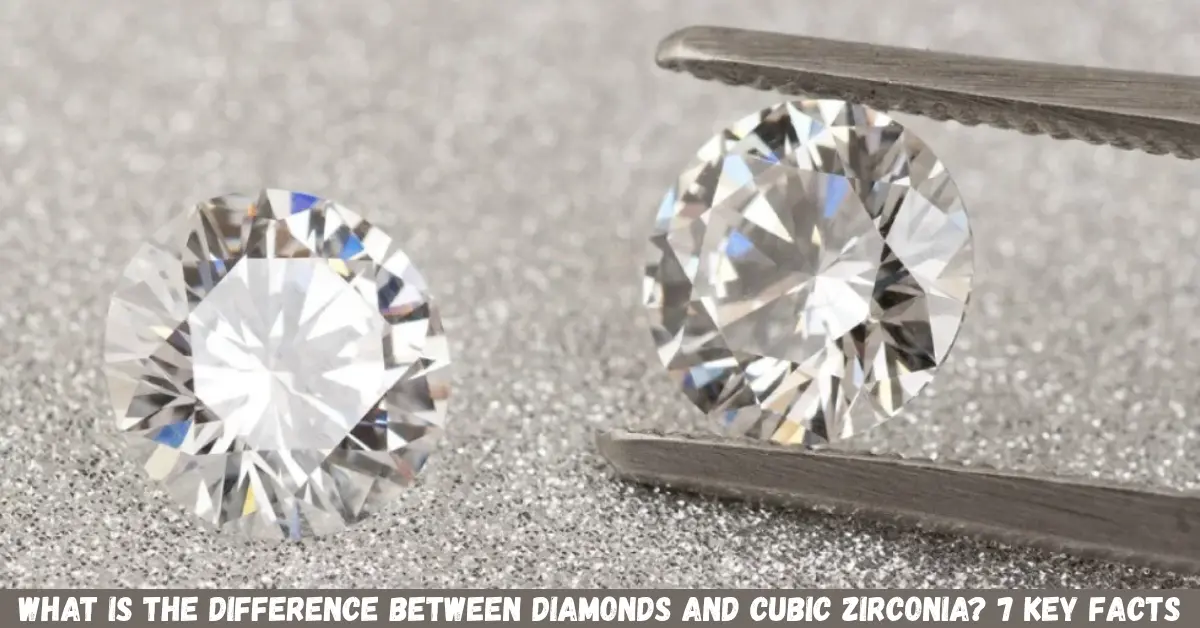
Cubic zirconia, commonly called CZ, is one of the best-known diamond simulants. It is a laboratory-created material made from zirconium oxide and is widely used in jewelry.
CZ became popular because it can be produced in clear, attractive stones and cut into shapes that resemble diamond jewelry. GIA lists cubic zirconia among the common diamond simulants.
One advantage of CZ is its affordability. It can give jewelry a diamond-like appearance without the cost associated with a diamond.
However, CZ is not as hard as diamond. GIA lists cubic zirconia at approximately 8.5 on the Mohs hardness scale, while diamond is rated at 10.
Advantages of Cubic Zirconia
- Generally more affordable than diamond
- Available in many sizes and colors
- Can have a convincing diamond-like appearance
- Suitable for fashion jewelry
- Easy to find in many jewelry markets
Limitations of Cubic Zirconia
- It is not a diamond
- It is softer than diamond
- It can develop scratches more easily
- Its optical appearance can differ from diamond
- Some CZ stones may change color over time
For occasional or fashion jewelry, these limitations may not be important. For a valuable engagement ring or long-term investment, buyers should understand exactly what stone they are purchasing.
What Is Moissanite?
Moissanite is another popular diamond simulant. It is made from silicon carbide and is known for its strong brilliance and noticeable fire.
Synthetic moissanite is commonly used in jewelry as a diamond alternative. GIA identifies synthetic moissanite as one of the major diamond simulants available in the market.
Moissanite is also relatively hard. GIA lists synthetic moissanite at approximately 9.25 on the Mohs scale, making it considerably harder than CZ, although still below diamond’s hardness of 10.
Why Do People Choose Moissanite?
People may choose moissanite because it offers:
- High brilliance
- Strong flashes of color, known as fire
- Good durability
- A diamond-like appearance
- A generally lower price than diamond
One important point is that moissanite does not look exactly like diamond under every condition. Its optical characteristics are different, and experienced professionals can identify it using gemological testing.
Are Lab-Grown Diamonds Fake?
No. Lab-grown diamonds are real diamonds, but they are not naturally mined diamonds.
This is one of the most important differences to understand when searching for fake diamond names.
Lab-grown diamonds are created using controlled technological processes. Two major methods are HPHT (High Pressure High Temperature) and CVD (Chemical Vapor Deposition). GIA explains that laboratory-grown diamonds have the same basic crystal structure and tightly bonded carbon atoms as natural diamonds.
The major difference is their origin.
A natural diamond forms through geological processes deep within the Earth, while a laboratory-grown diamond is produced in a controlled laboratory environment.
Natural Diamond vs Lab-Grown Diamond
| Feature | Natural Diamond | Lab-Grown Diamond |
|---|---|---|
| Is it actually diamond? | Yes | Yes |
| Origin | Natural geological formation | Laboratory |
| Main composition | Carbon | Carbon |
| Crystal structure | Diamond | Diamond |
| HPHT or CVD production | No | Yes |
| Can professionals identify the origin? | Yes, with appropriate testing | Yes, with appropriate testing |
Therefore, calling a lab-grown diamond a “fake diamond” is technically inaccurate. It is more precise to call it a laboratory-grown diamond.
Diamond Simulant vs Lab-Grown Diamond
The difference becomes much easier when you remember one simple rule:
A simulant looks like diamond. A lab-grown diamond is diamond.
GIA specifically states that laboratory-grown diamonds should not be confused with diamond imitations such as cubic zirconia or synthetic moissanite.
For example:
Cubic zirconia: Looks like diamond but is not diamond.
Moissanite: Looks similar to diamond but is not diamond.
Glass: Can imitate diamond’s appearance but is not diamond.
Lab-grown diamond: Is diamond, but it was created in a laboratory instead of being mined from the Earth.
This distinction is particularly important when comparing jewelry prices because two stones may look similar but belong to completely different gemological categories.
Why Do Fake Diamonds Look So Similar?
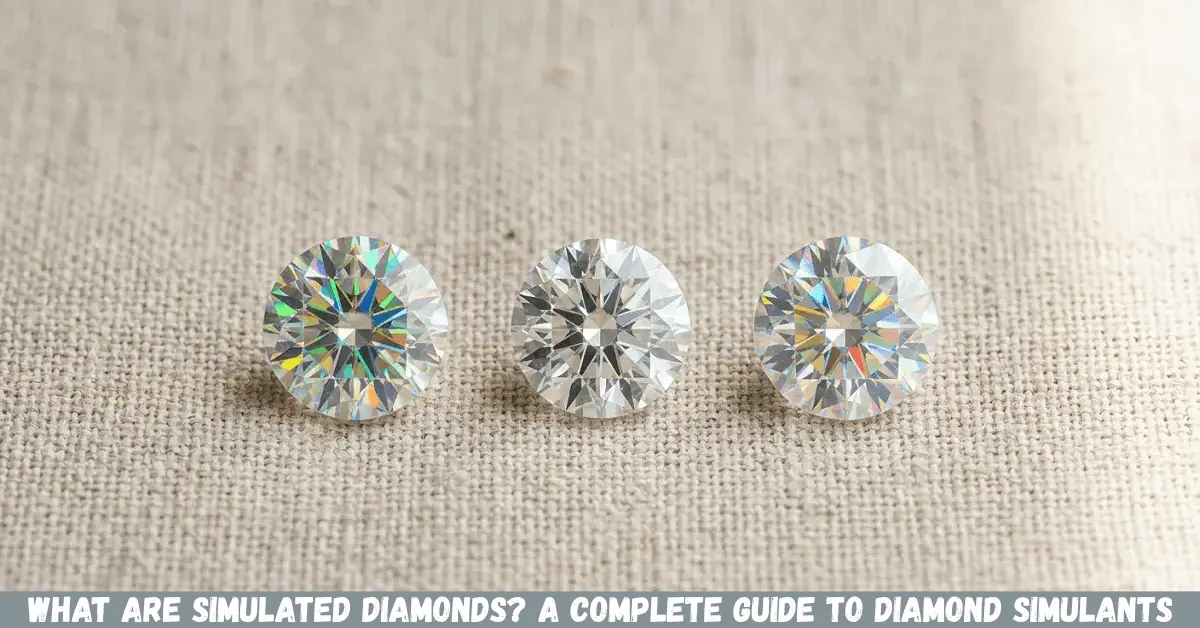
Diamond simulants are designed or selected because their appearance can resemble diamond.
Cutting also makes a major difference. A well-cut transparent stone can produce bright reflections and flashes of light. When it is mounted in a ring or necklace, the visual effect can become even more convincing.
However, appearance alone is not enough to establish what a gemstone actually is.
GIA notes that professional identification can involve measurements such as refractive index, density and spectroscopy rather than simply looking at the stone.
That is why relying only on visual inspection can be misleading.
How Can You Tell a Fake Diamond From a Real Diamond?
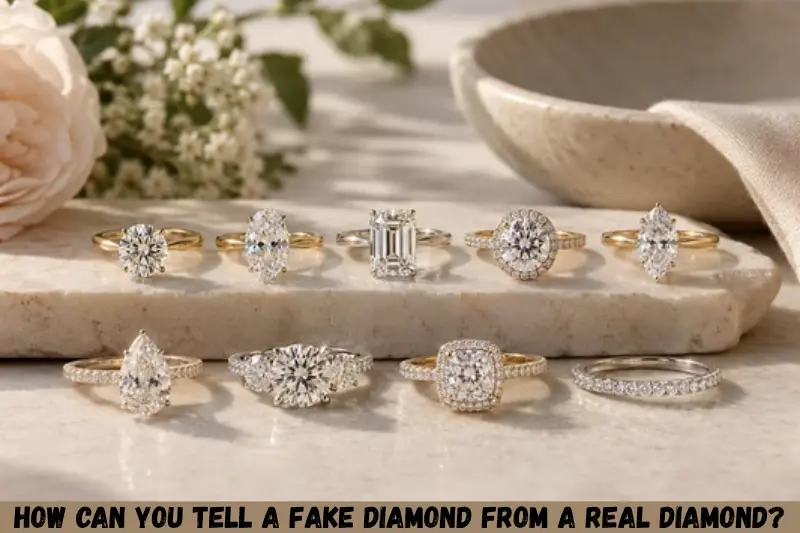
If you are buying an expensive stone, the safest approach is professional gemological testing and proper documentation, rather than relying on home tests.
A trained gemologist can use specialized equipment to distinguish diamonds from simulants and, when necessary, determine whether a diamond is natural or laboratory-grown.
Things to Check Before Buying
- Ask exactly what the stone is.
Do not settle for vague descriptions such as “diamond look” or “diamond style.” - Check whether it is natural, laboratory-grown, or a simulant.
These categories are different. - Ask for appropriate documentation.
For a valuable diamond purchase, an independent gemological report can provide useful information. - Check the seller’s description carefully.
The material and origin should be clearly represented. - Compare the description with the paperwork.
Make sure the stone you receive matches what was advertised.
The U.S. Federal Trade Commission’s Jewelry Guides emphasize truthful disclosure about the type and characteristics of gemstones and their laboratory-created or imitation substitutes.
Can You Identify a Diamond Simulant by Looking at It?
Sometimes you can notice visual differences, but appearance alone is not a reliable identification method.
Different simulants have different levels of brilliance, fire, hardness and optical behavior. Some may show stronger flashes of color than a diamond, while others may appear less bright or develop scratches more easily.
Professional testing is more reliable because gemological laboratories use scientific measurements and specialized instruments to identify the material.
This is particularly important when purchasing expensive jewelry. A visual inspection by itself should not be treated as proof of authenticity.
Are Fake Diamonds Worth Buying?
Diamond simulants can be worthwhile when the buyer specifically wants an affordable diamond-like appearance and understands that the stone is not diamond.
For example, someone purchasing a fashion ring for occasional use may prefer CZ because it can provide a similar visual style at a lower cost.
Another buyer may prefer moissanite because of its durability and distinctive brilliance.
The important point is transparency. A simulant can be a perfectly legitimate jewelry choice when it is sold and understood as a simulant.
Benefits of Diamond Simulants
- Usually lower-cost than natural diamonds
- Available in many styles
- Can provide a diamond-like appearance
- Useful for fashion jewelry
- Several materials offer good durability
- Can be suitable for buyers with a limited jewelry budget
Limitations of Diamond Simulants
- They are not diamonds
- Their physical properties differ from diamond
- Some scratch more easily
- Their optical appearance may differ
- Resale and valuation can differ significantly from diamond jewelry
Common Mistakes Buyers Should Avoid
Mistake 1: Calling Every Artificial Stone a Lab-Grown Diamond
A laboratory-created simulant is not automatically a laboratory-grown diamond.
CZ and synthetic moissanite can be made in laboratories, but they are still simulants because they are not diamond.
Mistake 2: Assuming “Synthetic” Always Means Fake
The terminology can be confusing.
In gemology, synthetic can refer to a laboratory-made material with essentially the same properties as its natural counterpart. GIA distinguishes synthetic or laboratory-grown diamonds from diamond simulants.
Therefore, always identify the actual material instead of relying on one word.
Mistake 3: Buying Based Only on Appearance
A stone can look convincing and still be a simulant.
For valuable purchases, ask questions about the stone’s identity and request appropriate documentation.
Mistake 4: Assuming a Very Low Price Means You Found a Bargain
A low price may simply reflect that the stone is CZ, moissanite, another simulant, or a different type of jewelry material.
Compare the product description, stone type, certification or report, metal quality and seller information before deciding what you are actually buying.
What Should You Call a Fake Diamond?
If you want the most accurate general term, use diamond simulant.
Depending on the material, you can be more specific:
- Cubic zirconia (CZ) — a common diamond simulant
- Moissanite — another popular diamond simulant
- Glass — can be used as a diamond imitation
- Colorless zircon — a natural material that can imitate diamond
- Colorless sapphire — another possible diamond imitation
GIA identifies materials such as CZ, moissanite, glass, zircon and other gemstones among materials that can be used as diamond imitations or simulants.
What Is the Best Term for SEO and Everyday Searches?
If someone searches “what are fake diamonds called,” the simplest answer is diamond simulants.
However, when discussing jewelry accurately, it is better to name the actual stone whenever possible. Saying “CZ” tells the buyer considerably more than simply saying “fake diamond.”
Likewise, calling a stone “moissanite” is more accurate than describing it as a generic fake diamond.
For lab-grown stones, use lab-grown diamond or laboratory-grown diamond, because the stone itself is diamond even though its origin is different from a mined diamond.
Frequently Asked Questions
1. What are fake diamonds called?
Fake diamonds are commonly called diamond simulants, simulated diamonds, or diamond imitations. Common examples include cubic zirconia and synthetic moissanite. These materials can resemble diamonds but have different chemical and physical properties. A laboratory-grown diamond is different because it is actually diamond material, even though it is produced in a laboratory rather than mined.
2. Is cubic zirconia a fake diamond?
Cubic zirconia is a diamond simulant, meaning it is not a diamond but is used to imitate its appearance. CZ is made from zirconium oxide and has different physical and optical properties from diamond. It is popular because it can provide a diamond-like appearance at a generally lower cost.
3. Is moissanite a fake diamond?
Moissanite is not a diamond, so it can accurately be described as a diamond simulant. It is made from silicon carbide and has its own optical and physical properties. Synthetic moissanite is popular in jewelry because it has strong brilliance, noticeable fire and good durability.
4. Is a lab-grown diamond a fake diamond?
No. A lab-grown diamond is an actual diamond produced in a laboratory. It has the same basic crystal structure and carbon composition as natural diamond, although its growth history is different. Specialized gemological testing can distinguish laboratory-grown diamonds from natural diamonds.
5. How can I know whether a diamond is real?
For an expensive purchase, professional gemological testing is the safest approach. Experts can use specialized instruments and scientific measurements to identify whether a stone is diamond, a simulant, or a laboratory-grown diamond. Buyers should also check the seller’s description and any relevant independent gemological documentation.
Conclusion
What are fake diamonds called? The most accurate general answer is diamond simulants or diamond imitations. Cubic zirconia and moissanite are two of the most common examples, while glass and certain other gemstones can also imitate diamond.
The most important distinction is between a diamond simulant and a lab-grown diamond. A simulant only resembles diamond, whereas a lab-grown diamond is actually diamond that was produced in a controlled laboratory environment.
If you are shopping for jewelry in India or elsewhere, do not judge a stone only by how much it sparkles. Ask whether it is a natural diamond, laboratory-grown diamond, CZ, moissanite, or another material, and check appropriate documentation when the purchase is valuable. That simple step can help you understand exactly what you are paying for.