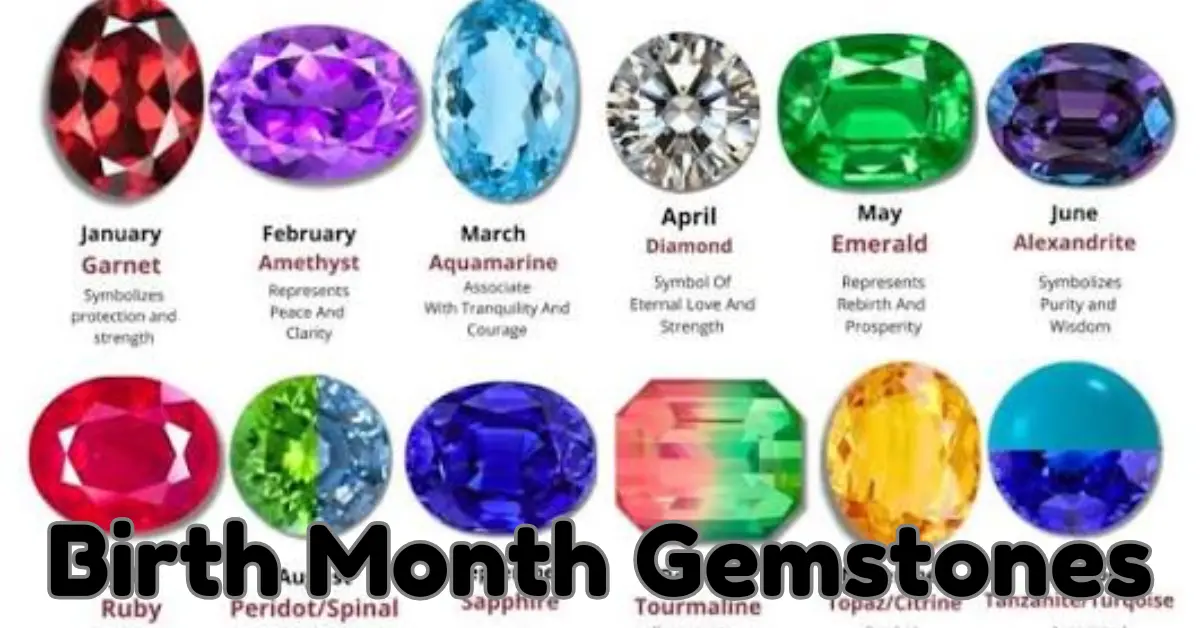

Birth month gemstones are precious or semi-precious stones traditionally associated with each month of the year. From January’s deep red garnet to December’s blue-toned turquoise, these stones are valued for their beauty, symbolism, history, and personal connection to a person’s birth month.
In India, gemstones already hold an important place in jewellery, gifting traditions, astrology, and personal adornment. Birthstones add another way to choose a meaningful gemstone, especially for rings, pendants, bracelets, earrings, and birthday gifts.
This guide covers the birthstones for all 12 months, their typical colors and meanings, alternative stones, practical buying considerations, and the difference between modern birthstone traditions and astrological gemstone recommendations.
What Are Birth Month Gemstones?
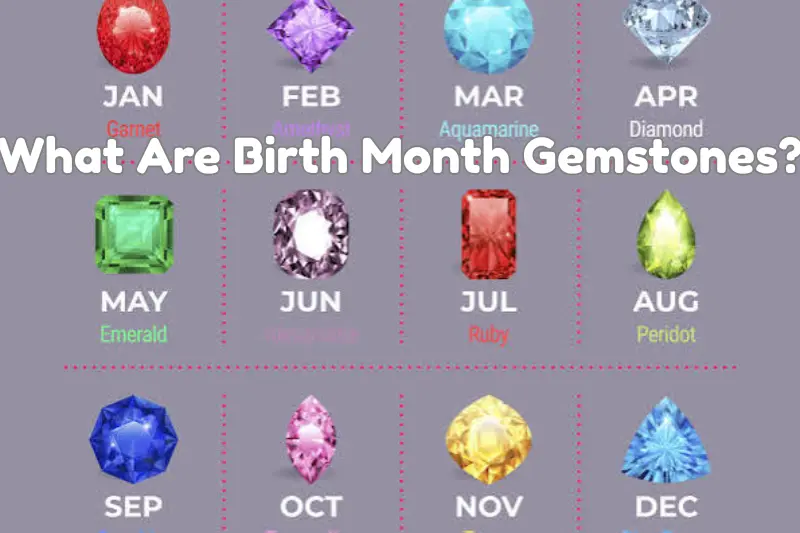
Birth month gemstones are gems assigned to the 12 months of the calendar year. A person commonly chooses the gemstone associated with the month in which they were born.
For example, garnet is associated with January, amethyst with February, and diamond with April. Some months have more than one recognized stone because birthstone lists have developed through different traditions and have been updated over time.
Birthstones should not automatically be treated as the same thing as Vedic astrological gemstones. A birthstone is generally selected according to the birth month, while Jyotish gemstone recommendations may consider factors such as a person’s birth chart and planetary associations.
Birth Month Gemstones Chart
Here is a quick comparison of the commonly recognized birthstones from January to December.
| Birth Month | Main Gemstone | Common Color | Common Symbolism |
|---|---|---|---|
| January | Garnet | Deep red | Friendship and protection |
| February | Amethyst | Purple | Calm and clarity |
| March | Aquamarine | Light blue | Serenity and courage |
| April | Diamond | Colorless | Strength and enduring love |
| May | Emerald | Green | Renewal and growth |
| June | Pearl, Alexandrite, Moonstone | White, changing hues | Purity and balance |
| July | Ruby | Red | Passion and vitality |
| August | Peridot, Spinel, Sardonyx | Green and varied colors | Positivity and strength |
| September | Sapphire | Blue | Loyalty and wisdom |
| October | Opal, Tourmaline | Multicolor | Creativity and hope |
| November | Topaz, Citrine | Yellow to orange | Warmth and joy |
| December | Turquoise, Tanzanite, Zircon | Blue | Good fortune and well-being |
Colors can vary significantly within individual gem varieties, so this table represents common appearances rather than strict rules.
January Birthstone: Garnet
Garnet is the traditional gemstone associated with January. Although deep red is its most familiar appearance, garnet is actually a family of minerals that occurs in several colors, including green, orange, purple, and reddish-brown.
Meaning of Garnet
Garnet has historically been associated with friendship, protection, commitment, and vitality. Its rich appearance makes it particularly suitable for rings, earrings, and pendants.
January-born buyers do not have to restrict themselves to red. Different garnet varieties provide options for people who want something less conventional.
February Birthstone: Amethyst
Amethyst is February’s primary birthstone and is a purple variety of quartz. Its color can range from pale lilac to deeper violet shades.
Why Is Amethyst Popular?
Amethyst combines an attractive color with relatively broad availability. It has traditionally been associated with calmness, clarity, and balance.
For jewellery buyers in India, amethyst can be an appealing option when they want a colorful gemstone without moving into the price range of some premium precious stones.
March Birthstone: Aquamarine
Aquamarine is one of the best-known birth month gemstones for March. It belongs to the beryl mineral family, the same mineral family that includes emerald.
Aquamarine typically appears in pale blue to blue-green shades reminiscent of clear seawater.
Meaning of Aquamarine
The gemstone is traditionally connected with serenity, courage, and safe travel. Its clean, subtle appearance works particularly well with minimalist jewellery.
When buying aquamarine, consider color, clarity, cut, carat weight, and whether any treatment has been disclosed.
April Birthstone: Diamond
Diamond is April’s birthstone and one of the world’s most recognizable gemstones. While colorless diamonds are the classic choice, natural diamonds can occur in numerous colors.
What Does Diamond Symbolize?
Diamonds are commonly associated with strength, commitment, and enduring love. Their exceptional hardness also makes them highly suitable for jewellery designed for frequent wear.
Price can vary dramatically depending on characteristics such as cut, color, clarity, carat weight, origin, and whether the diamond is natural or laboratory-grown.
Buyers should understand exactly what they are purchasing and request appropriate grading information for significant purchases.
May Birthstone: Emerald
Emerald is the traditional birthstone for May. Its distinctive green appearance has made it one of the world’s most recognizable colored gemstones.
Like aquamarine, emerald is a variety of the mineral beryl.
Meaning of Emerald
Emerald has long been connected symbolically with renewal, growth, prosperity, and love.
Many natural emeralds contain visible internal characteristics. Buyers should therefore avoid assuming that every inclusion automatically means an emerald is poor quality.
Treatment disclosure is important because emeralds are commonly treated to improve the appearance of fractures.
June Birthstones: Pearl, Alexandrite and Moonstone
June stands out because it has several widely recognized birthstone options: pearl, alexandrite, and moonstone.
Pearl
Unlike mineral gemstones formed within the Earth, pearls are organic gems produced by certain mollusks. They are widely associated with purity, elegance, and simplicity.
Pearls require more careful handling than many harder gemstones.
Alexandrite
Alexandrite is famous for its ability to display noticeably different colors under different lighting conditions. Fine natural alexandrite can be rare and expensive.
Moonstone
Moonstone is known for a floating light effect called adularescence. Its softer, luminous appearance makes it popular in artistic and elegant jewellery designs.
July Birthstone: Ruby
Ruby is July’s classic birthstone. It is the red variety of corundum, while other gem-quality colors of corundum are generally classified as sapphires.
What Does Ruby Represent?
Ruby is traditionally associated with passion, vitality, love, and strength. Its intense red appearance gives it a strong visual presence even in smaller jewellery designs.
High-quality natural rubies can be valuable. Buyers should pay attention to treatment disclosures because treatments can significantly affect value and purchasing decisions.
August Birthstones: Peridot, Spinel and Sardonyx
August offers several birthstone choices, including peridot, spinel, and sardonyx.
Peridot
Peridot is especially recognizable because of its yellowish-green to green appearance. Unlike many gemstones available in numerous colors, peridot’s identity is strongly associated with green.
Spinel
Spinel is available in a wide range of colors, including red, pink, purple, blue, and other shades. It provides August-born jewellery buyers with considerable flexibility.
Sardonyx
Sardonyx combines layers of sard and onyx and has a long history of use in carvings, jewellery, and decorative objects.
September Birthstone: Sapphire
Sapphire is September’s principal birthstone. Blue is its most famous color, but sapphire can occur in many colors other than red.
Red gem-quality corundum is classified as ruby.
Meaning of Sapphire
Sapphire has traditionally represented loyalty, sincerity, wisdom, and integrity.
Its durability makes sapphire suitable for many forms of jewellery, including rings that receive regular wear. However, buyers should still consider setting quality and proper jewellery care.
October Birthstones: Opal and Tourmaline
October has two particularly colorful birthstones: opal and tourmaline.
Opal
Precious opal can display flashes of multiple spectral colors, a phenomenon known as play-of-color. Individual opals can look dramatically different from one another.
Opal requires thoughtful care because it is less resistant to scratching and damage than some popular ring stones.
Tourmaline
Tourmaline offers an exceptionally broad range of colors. Pink tourmaline is frequently associated with October birthstone jewellery, but green and multicolored varieties are also available.
November Birthstones: Topaz and Citrine
November is associated with topaz and citrine. Warm yellow, golden, and orange shades make these stones especially recognizable in November-themed jewellery.
Topaz
Topaz naturally occurs in different colors and is used extensively in gemstone jewellery. Some colors seen commercially can result from treatments, making disclosure important.
Citrine
Citrine is a yellow-to-orange variety of quartz. It is traditionally associated with warmth, optimism, and positive energy.
For buyers seeking an attractive November birthstone at a more accessible price, citrine can provide many design choices.
December Birthstones: Turquoise, Tanzanite and Zircon
December offers multiple blue-themed choices, most notably turquoise, tanzanite, and zircon.
Turquoise
Turquoise is an opaque gemstone famous for its blue to blue-green appearance. It has been used in jewellery and decorative objects across numerous cultures.
Tanzanite
Tanzanite is prized for blue to violet hues. It requires appropriate care because it is not as resistant to wear as diamond, ruby, or sapphire.
Zircon
Natural zircon should not be confused with cubic zirconia. Zircon is a naturally occurring mineral and gemstone, while cubic zirconia is a manufactured diamond simulant.
Blue zircon is particularly popular for December birthstone jewellery.
How to Choose the Right Birth Month Gemstone
Choosing a birthstone should involve more than simply matching a stone to your birth month. Consider how the jewellery will actually be worn.
A practical process is:
- Identify your birth month: Start with the traditional or modern stones associated with your month.
- Compare available alternatives: Months such as June, August, October, November, and December provide multiple choices.
- Consider durability: A gemstone for an everyday ring may need different durability characteristics from a stone used occasionally in a pendant.
- Set your budget: Gemstone prices can vary enormously depending on rarity, quality, size, treatments, and origin.
- Check treatment disclosure: Ask whether the gemstone has undergone treatments that alter its appearance.
- Buy from a trustworthy seller: For expensive stones, request clear documentation and an independent laboratory report when appropriate.
The best practical choice combines personal preference, suitable durability, transparent information, and a realistic budget.
Birthstones vs Astrological Gemstones in India
Birthstones and astrological gemstones are not necessarily interchangeable.
Birth month gemstones are selected primarily according to the calendar month of birth. Astrological gemstone traditions in India may instead connect gemstones with planets, zodiac-related systems, and an individual’s horoscope.
Someone born in September, for example, can choose sapphire simply because it is September’s birthstone. That does not mean sapphire is automatically the appropriate gemstone for that person’s Vedic astrological purposes.
If you are purchasing a stone specifically for Jyotish or another spiritual practice, treat that as a separate decision from buying birthstone jewellery for personal or decorative reasons.
Benefits of Choosing Birthstone Jewellery
The biggest benefit of birthstone jewellery is personalization. A gemstone connected with someone’s birth month can turn an ordinary jewellery piece into a meaningful gift or keepsake.
Birthstones can work particularly well for:
- Birthday gifts
- Personalized rings and pendants
- Family jewellery featuring several birth months
- Anniversary gifts
- Bracelets and charms
- Earrings
- Custom jewellery designs
However, symbolic meanings associated with gemstones should not be confused with scientifically established medical benefits. Choose birthstones primarily for their beauty, tradition, symbolism, and personal significance.
Common Mistakes When Buying Birth Month Gemstones
One common mistake is choosing a gemstone based only on color. Two stones with similar appearances can have very different durability, rarity, treatment histories, and values.
Another mistake is assuming that a higher price automatically means better quality.
Buyers should also avoid confusing natural, laboratory-grown, synthetic, imitation, and treated materials. These terms do not all mean the same thing.
For higher-value purchases, ask the seller for clear information about:
- Gemstone identity
- Natural or laboratory-grown origin
- Known treatments
- Weight and dimensions
- Return policy
- Certification or laboratory report, when relevant
Transparent information makes it much easier to compare stones fairly.
Caring for Your Birthstone Jewellery
Proper care depends on the specific gemstone. There is no single cleaning method that is ideal for every birthstone.
Diamond, sapphire, and ruby are comparatively durable, while gems such as pearl and opal require more careful treatment.
As a general precaution, keep gemstone jewellery away from harsh chemicals, heavy impact, and unnecessary abrasion. Store pieces separately to reduce scratching.
For valuable jewellery or stones whose treatments are unknown, professional cleaning advice is preferable to experimenting with aggressive cleaning methods at home.
Frequently Asked Questions
1. What are the 12 main birth month gemstones?
The commonly recognized main stones include garnet for January, amethyst for February, aquamarine for March, diamond for April, emerald for May, pearl for June, ruby for July, peridot for August, sapphire for September, opal for October, topaz for November, and turquoise for December. Several months also have accepted alternative birthstones.
2. Can one month have more than one birthstone?
Yes. Several months have multiple recognized birthstones because birthstone traditions have evolved and different lists have been used over time. June, August, October, November, and December are notable examples. Having alternatives gives buyers greater freedom to choose according to preferred color, jewellery style, availability, durability, and budget.
3. Are birthstones the same as zodiac or Vedic astrology gemstones?
No. Birthstones are generally assigned according to a person’s calendar birth month. Vedic astrology may recommend gemstones using a person’s horoscope and planetary considerations. Therefore, a gemstone associated with your birth month is not automatically the gemstone an astrologer would recommend for astrological purposes.
4. Which birthstone is best for everyday jewellery?
Durability matters when selecting a gemstone for frequent wear. Diamond, ruby, and sapphire are particularly well suited to many everyday jewellery applications because of their hardness. Softer or more delicate materials may require additional care. The setting, jewellery design, lifestyle, and gemstone’s condition should also influence your decision.
5. How can I know whether a birthstone is genuine?
Purchase from a reputable jeweller and ask for clear information about the stone’s identity, treatments, and whether it is natural or laboratory-grown. For expensive gemstones, an independent gemological laboratory report can provide additional verification. Be cautious of vague descriptions or sellers making valuable-stone claims without adequate supporting information.
Conclusion
Birth month gemstones provide a simple and meaningful way to connect jewellery with a person’s month of birth. Garnet, amethyst, aquamarine, diamond, emerald, ruby, sapphire, opal, turquoise, and the other recognized birthstones each offer distinctive colors, properties, and traditions.
For buyers in India, it is also useful to distinguish birthstone jewellery from gemstones selected specifically for Vedic astrology. Before purchasing, compare the gemstone’s durability, quality, treatments, authenticity, price, and suitability for the type of jewellery you plan to wear.
Your next step is simple: identify your birth month, compare its available gemstones, decide how often you will wear the jewellery, and then choose a stone from a trustworthy seller that fits your style and budget.