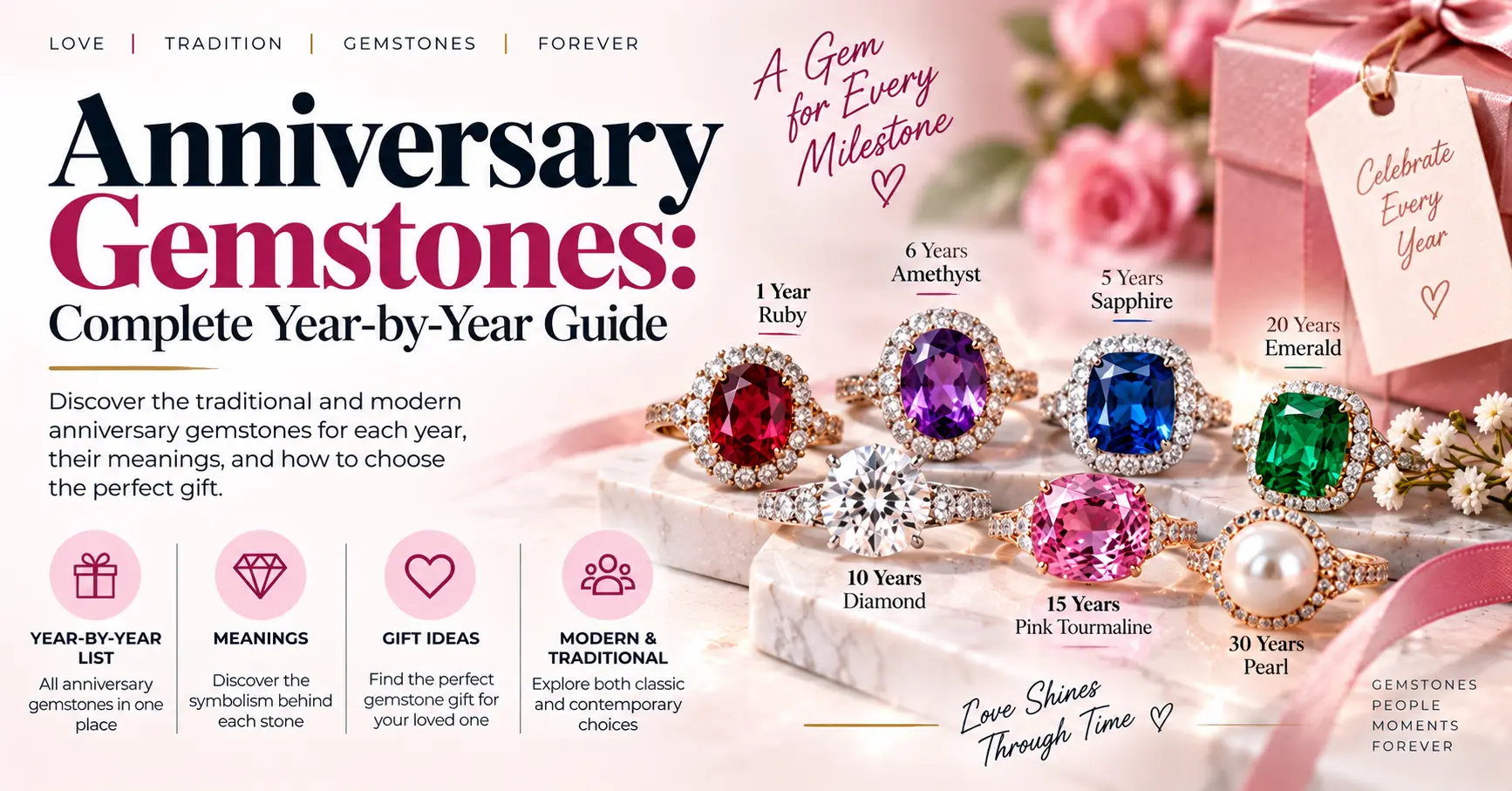

Anniversary gemstones are precious or semi-precious stones traditionally associated with particular wedding anniversaries. From gold and garnet for early milestones to emerald, ruby, sapphire, and diamond for major anniversaries, these stones offer a meaningful way to celebrate years spent together.
For couples in India, gemstone anniversary gifts can be especially appealing because jewellery already plays an important role in weddings, celebrations, and family traditions. A gemstone ring, pendant, bracelet, earrings, or custom jewellery piece can combine symbolism with something that can be worn for years.
This guide explains anniversary gemstones by year, their traditional meanings, how to select the right stone, what to consider before buying, and how to care for anniversary jewellery.
What Are Anniversary Gemstones?
Anniversary gemstones are stones traditionally connected with specific wedding anniversary years. They are often used in jewellery gifts to represent the relationship, memories, and milestone being celebrated.
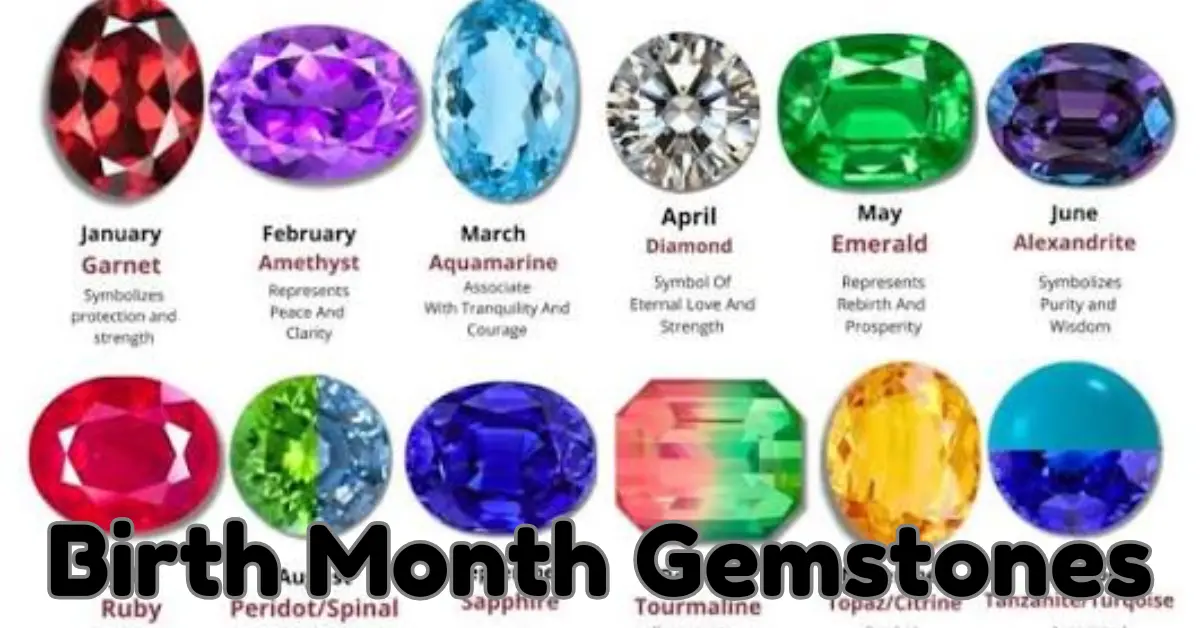
Unlike birthstones, which are linked to a person’s birth month, anniversary stones are associated with the number of years a couple has been married.
There is no single universal list followed everywhere. Anniversary traditions have developed through different jewellery organisations, retailers, and cultural practices, so you may occasionally find different gemstones listed for the same year.
This flexibility can actually be useful. Couples can follow the traditional stone or choose an alternative that better suits their budget, jewellery preferences, or personal story.
Anniversary Gemstones by Year
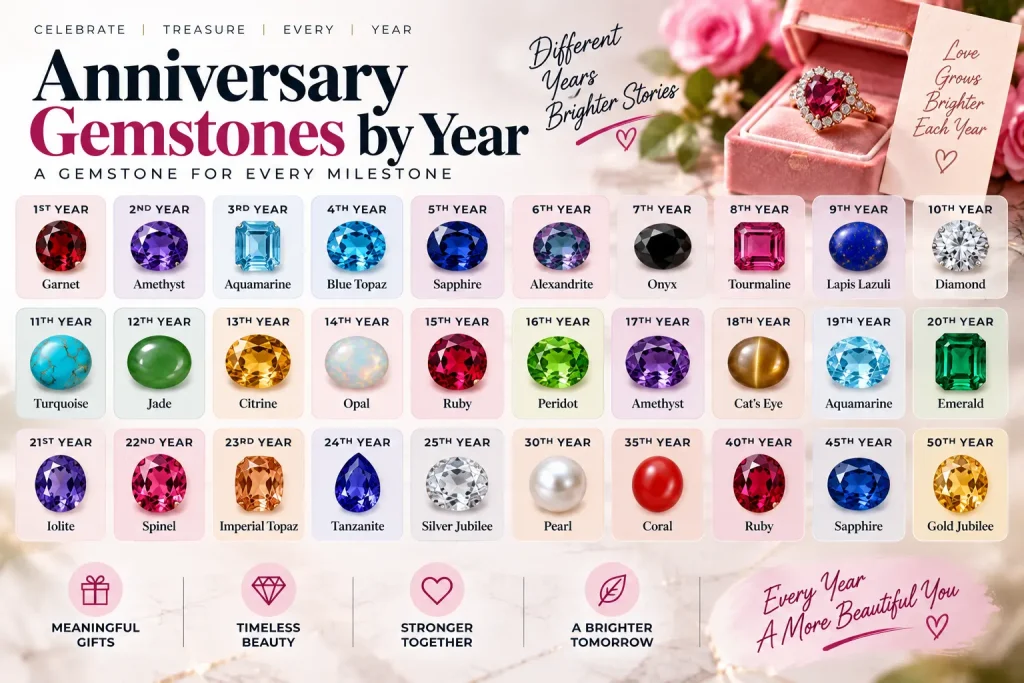
The following table provides a practical overview of commonly used anniversary materials and gemstones. Traditions can vary, particularly for the earlier anniversary years.
| Anniversary | Common Gemstone or Material | Common Symbolism |
|---|---|---|
| 1st | Gold | Prosperity and a new beginning |
| 2nd | Garnet | Commitment and affection |
| 3rd | Pearl | Beauty and harmony |
| 4th | Blue Topaz | Affection and communication |
| 5th | Sapphire | Loyalty and sincerity |
| 6th | Amethyst | Balance and devotion |
| 7th | Onyx | Strength and protection |
| 8th | Tourmaline | Love and creativity |
| 9th | Lapis Lazuli | Truth and friendship |
| 10th | Diamond | Enduring commitment |
| 11th | Turquoise | Good fortune and protection |
| 12th | Jade | Harmony and prosperity |
| 13th | Citrine | Joy and optimism |
| 14th | Opal | Hope and creativity |
| 15th | Ruby | Passion and love |
| 16th | Peridot | Renewal and positivity |
| 17th | Carnelian | Energy and warmth |
| 18th | Cat’s Eye | Protection and awareness |
| 19th | Aquamarine | Calmness and harmony |
| 20th | Emerald | Growth and lasting love |
| 25th | Tsavorite or silver-themed jewellery | Celebration and vitality |
| 30th | Pearl | Wisdom and enduring beauty |
| 35th | Emerald | Renewal and devotion |
| 40th | Ruby | Deep love and passion |
| 45th | Sapphire | Loyalty and lasting commitment |
| 50th | Gold | Prosperity and enduring value |
| 55th | Alexandrite | Change and enduring connection |
| 60th | Diamond | Strength and longevity |
Because anniversary lists are not completely standardized, consider the table a useful starting point rather than a strict rule.
Most Popular Anniversary Gemstones and Their Meanings
Some anniversary stones stand out because of their beauty, symbolism, rarity, or suitability for jewellery.
Garnet
Garnet is commonly associated with the second wedding anniversary.
Although deep red garnet is probably the best-known variety, the garnet family occurs in several colours. Its rich appearance makes it suitable for rings, earrings, pendants, and bracelets.
Garnet is often associated with commitment and affection, making it a fitting choice for an early marriage milestone.
Pearl
Pearl is traditionally associated with milestones including the third and 30th anniversaries on commonly used lists.
Unlike most gemstones, pearls are organic gems formed inside certain molluscs. Their soft lustre gives them a classic appearance that works particularly well in necklaces, earrings, and pendants.
Pearls require more careful handling than many harder gemstones. They should be protected from scratches, harsh chemicals, perfumes, and excessive heat.
Sapphire
Sapphire is one of the most recognizable anniversary gemstones and is commonly connected with the fifth and 45th anniversaries.
Blue is its most famous colour, but sapphire occurs naturally in several colours. Sapphire is a variety of corundum and scores 9 on the Mohs hardness scale, making it a practical choice for jewellery worn regularly.
Its traditional associations with loyalty and sincerity make sapphire particularly appropriate for anniversary jewellery.
Diamond
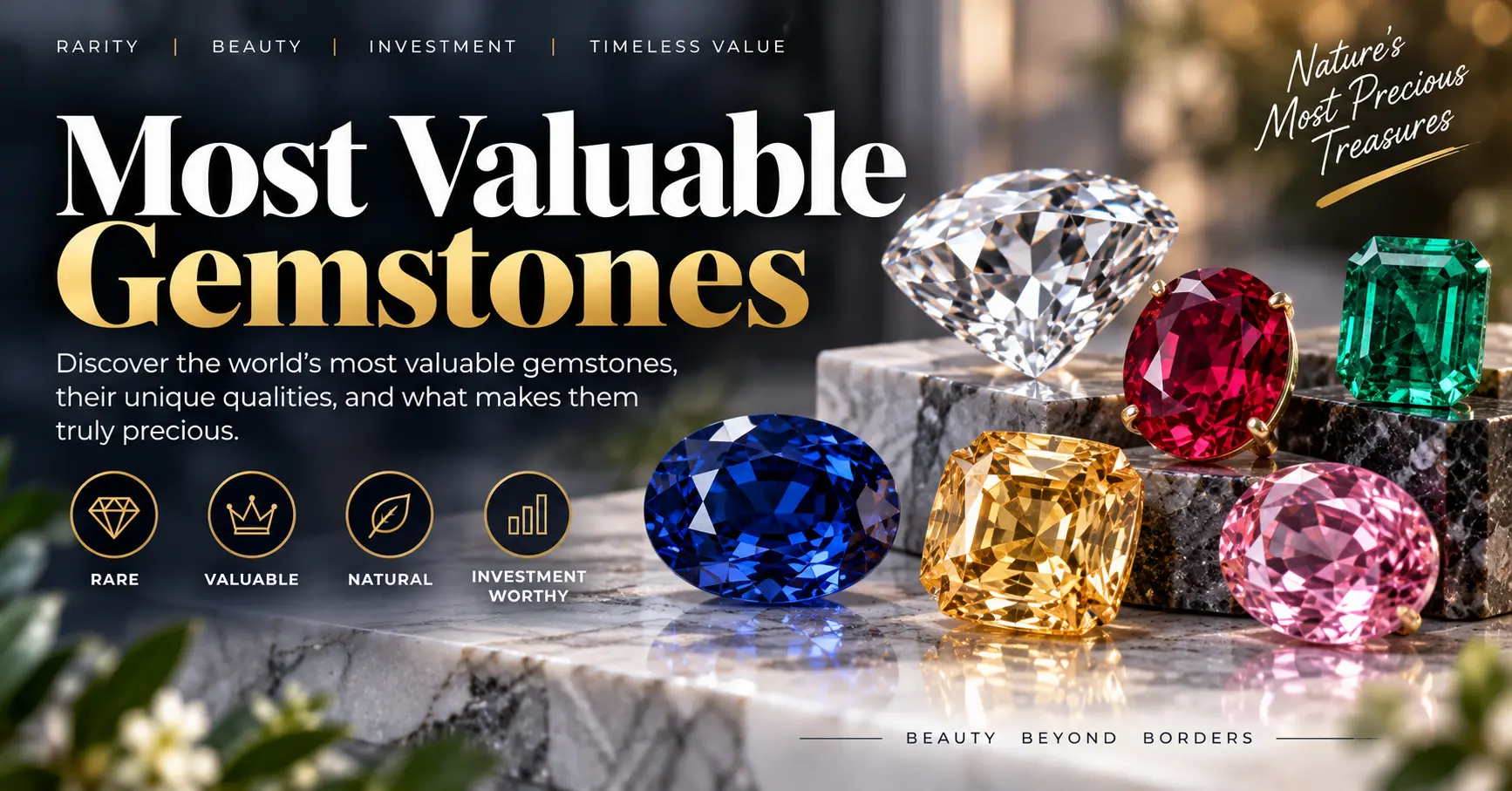
Diamond is strongly associated with important wedding milestones, particularly the 10th and 60th anniversaries.
With a hardness of 10 on the Mohs scale, diamond is the hardest natural mineral. However, hardness refers to resistance to scratching and does not mean a diamond is impossible to chip or damage.
Diamonds work well in rings, earrings, pendants, and bracelets. When buying one, pay attention to the well-known 4Cs: cut, colour, clarity, and carat weight.
Ruby
Ruby is the classic gemstone of the 15th and 40th wedding anniversaries on many traditional lists.
Ruby is the red variety of corundum, the same mineral family as sapphire. It has a Mohs hardness of 9 and can therefore be suitable for frequently worn jewellery.
Its vivid red colour has long made ruby a popular symbol of passion, affection, and enduring love.
Emerald
Emerald is commonly associated with the 20th and 35th wedding anniversaries.
Its distinctive green colour makes it one of the world’s best-known coloured gemstones. Emerald belongs to the beryl mineral family and measures approximately 7.5–8 on the Mohs hardness scale.
Many natural emeralds contain inclusions. Buyers should not judge an emerald using diamond standards because the appearance and value factors of coloured gemstones are different.
Anniversary Gemstones for Major Marriage Milestones
Certain anniversaries have particularly strong gemstone traditions.
10th Anniversary: Diamond
Ten years of marriage is frequently celebrated with diamond jewellery. A diamond anniversary ring can complement an existing wedding or engagement ring, while earrings and pendants offer alternatives for someone who does not regularly wear rings.
A smaller, well-cut diamond may appear more attractive than a larger stone with poor proportions, so carat weight should not be the only buying consideration.
15th Anniversary: Ruby
Ruby represents one of the most colourful major anniversary choices.
When comparing rubies, consider colour, transparency, cut, size, treatment, and origin documentation where relevant. Natural rubies can vary dramatically in price, so establishing a realistic budget before shopping is helpful.
20th Anniversary: Emerald
The 20th anniversary is commonly associated with emerald.
An emerald ring can make an impressive gift, but earrings and pendants may experience less daily impact. This can be useful because emeralds often require more careful wear than diamonds, rubies, or sapphires.
25th Anniversary
The 25th wedding anniversary is traditionally famous as the silver anniversary. Some modern gemstone lists also suggest green gemstones such as tsavorite.
Couples do not need to abandon the traditional silver theme. A gemstone can instead be incorporated into a silver-coloured jewellery design or selected according to personal preference.
40th Anniversary: Ruby
Ruby returns as an important gemstone for the 40th anniversary.
Its rich red appearance makes it particularly suitable for milestone jewellery. Ruby can be paired with diamonds for contrast or used alone as the focal stone.
50th Anniversary: Gold
The 50th wedding anniversary is widely known as the golden anniversary.
Gold itself is a precious metal rather than a gemstone, but it remains one of the strongest anniversary traditions. In India, gold jewellery can also carry cultural and family significance beyond its role as an anniversary present.
60th Anniversary: Diamond
Diamond is commonly associated with the 60th anniversary, often called the diamond anniversary.
Rather than simply purchasing the largest available diamond, consider the recipient’s jewellery style. A thoughtfully designed pendant, ring, bracelet, or pair of earrings can make the milestone more personal.
How to Choose the Right Anniversary Gemstone
The best anniversary gemstone combines tradition, personal preference, practicality, and budget. A traditional stone has symbolic value, but the recipient should also enjoy wearing it.
Consider these five factors:
- Anniversary year: Check the commonly associated gemstone or material for your milestone.
- Personal preference: Think about favourite colours, jewellery styles, metals, and stones.
- Durability: Choose a stone suitable for how frequently the jewellery will be worn.
- Budget: Compare stones of different sizes, qualities, treatments, and designs rather than overspending for size alone.
- Quality documentation: For significant purchases, ask for proper invoices, treatment disclosures, and appropriate laboratory reports.
A gemstone with personal meaning can be a better gift than following tradition mechanically.
Choosing Anniversary Gemstones in India
Indian buyers have access to a large jewellery market ranging from traditional gold jewellery to contemporary diamond and coloured gemstone pieces.
Before buying expensive anniversary jewellery, compare more than appearance alone. Ask the jeweller exactly what you are purchasing, particularly whether the gemstone is natural, laboratory-grown, treated, assembled, or otherwise enhanced.
Check Gemstone Treatments
Gemstone treatments are common within the jewellery industry, and treatment does not automatically make a stone unsuitable.
The important issue is disclosure.
For example, heating is widely encountered in coloured gemstones, while emeralds may be treated with oils or other fillers to improve the appearance of surface-reaching fractures.
Ask the seller to disclose treatments clearly because they can affect value, durability, care requirements, and future repairs.
Ask for an Independent Laboratory Report
For a high-value ruby, sapphire, emerald, diamond, or other significant gemstone, an independent gemological laboratory report can provide useful identification information.
A report may state whether a stone is natural or laboratory-grown and identify detectable treatments. Depending on the gemstone and laboratory, additional information may also be provided.
Remember that a laboratory report is not automatically the same thing as a monetary appraisal.
Compare the Entire Jewellery Piece
Do not evaluate only the centre gemstone.
Check the metal purity, craftsmanship, setting security, stone measurements, return policy, warranty, resizing options, and after-sales service.
For gold jewellery in India, buyers should also pay attention to applicable hallmarking information when purchasing hallmarked pieces.
Natural vs Lab-Grown Anniversary Gemstones
Natural gemstones form through geological or biological processes, while laboratory-grown gemstones are produced under controlled conditions and can have essentially the same chemical and physical properties as their natural counterparts, depending on the material.
Lab-grown does not mean imitation. For example, a laboratory-grown diamond is different from a diamond simulant such as cubic zirconia.
Natural gemstones may appeal to buyers who value geological rarity. Laboratory-grown options can provide different price and size choices.
Whichever you select, accurate disclosure is essential.
Best Jewellery Styles for Anniversary Gemstones
The ideal jewellery type depends on the stone and the recipient’s lifestyle.
Rings are highly symbolic and can be worn alongside wedding jewellery. Durable stones such as diamond, sapphire, and ruby are particularly practical options for frequently worn rings.
Pendants provide greater flexibility for gemstones that need more protection. They can also accommodate larger centre stones without the everyday exposure experienced by rings.
Earrings work well for diamonds, pearls, emeralds, sapphires, and many other gems.
Bracelets can be beautiful anniversary gifts but should use secure settings because wrist jewellery regularly comes into contact with surrounding objects.
Anniversary Gemstone Care Tips
Different gemstones require different care methods. There is no single cleaning technique that is safe for every anniversary gemstone.
Diamond, ruby, and sapphire are relatively hard, but jewellery settings can still loosen or become damaged. Emeralds and pearls generally require gentler handling.
For safer everyday care:
- Store jewellery pieces separately to reduce scratching.
- Remove valuable jewellery before strenuous physical activities.
- Keep pearls away from harsh household chemicals.
- Avoid assuming ultrasonic or steam cleaning is suitable for every gemstone.
- Have frequently worn rings checked periodically for loose stones or worn prongs.
- Follow care instructions appropriate to the gemstone and any known treatments.
When uncertain, ask a qualified jeweller or gemologist before using a mechanical cleaning device.
Common Mistakes When Buying Anniversary Gemstones
One common mistake is choosing a stone purely because it appears on an anniversary list. Tradition matters, but jewellery should still match the recipient’s taste.
Another mistake is assuming that bigger always means better. Colour, cut, clarity, durability, rarity, treatments, craftsmanship, and overall design can all influence quality and value.
Buyers should also avoid relying only on marketing names. Ask for the actual gemstone identity and treatment information.
Finally, do not assume every seller uses exactly the same anniversary gemstone chart. Traditions differ, so verify the milestone and then select the option that carries the most meaning for you.
Frequently Asked Questions
What gemstone represents a wedding anniversary?
The gemstone depends on the anniversary year. Common examples include garnet for the second anniversary, sapphire for the fifth, diamond for the 10th, ruby for the 15th, and emerald for the 20th. Lists can vary, so anniversary gemstones should be treated as traditions rather than strict rules.
What gemstone is for the 10th wedding anniversary?
Diamond is commonly associated with the 10th wedding anniversary. Its durability and traditional connection with lasting commitment make it popular for milestone jewellery. Diamond rings are common, but earrings, pendants, bracelets, and other jewellery can work equally well depending on the recipient’s style and preferences.
Which gemstone represents 20 years of marriage?
Emerald is commonly associated with the 20th wedding anniversary. Its rich green colour is traditionally linked with growth and renewal. Because many emeralds have natural inclusions and may receive clarity-enhancing treatments, buyers should ask about treatment disclosure and appropriate care before purchasing expensive emerald jewellery.
Are anniversary gemstones the same as birthstones?
No. Birthstones are traditionally associated with the month in which someone was born, whereas anniversary gemstones correspond to years of marriage. A couple can still combine the traditions. For example, an anniversary jewellery piece could feature the traditional anniversary stone alongside one or both partners’ birthstones.
Do I have to buy the traditional anniversary gemstone?
No. Anniversary gemstone lists provide inspiration rather than compulsory rules. If the traditional stone does not match the recipient’s taste, budget, or lifestyle, choose another meaningful gemstone. A favourite colour, birthstone, wedding-related stone, or gemstone connected with a special memory can create an equally thoughtful gift.
Conclusion
Anniversary gemstones turn important marriage milestones into meaningful jewellery gifts. Garnet, pearl, sapphire, diamond, ruby, emerald, and other stones each provide different colours, properties, and traditional associations, while gold remains central to milestones such as the 50th anniversary.
When choosing anniversary jewellery in India, start with the traditional gemstone for the year, then consider personal style, durability, gemstone treatments, jewellery quality, and budget. For valuable purchases, request clear disclosures and appropriate documentation before making your decision.
The best next step is simple: identify your anniversary year, shortlist the traditional gemstone and one personal alternative, and then compare reputable jewellery options based on quality rather than size alone.